
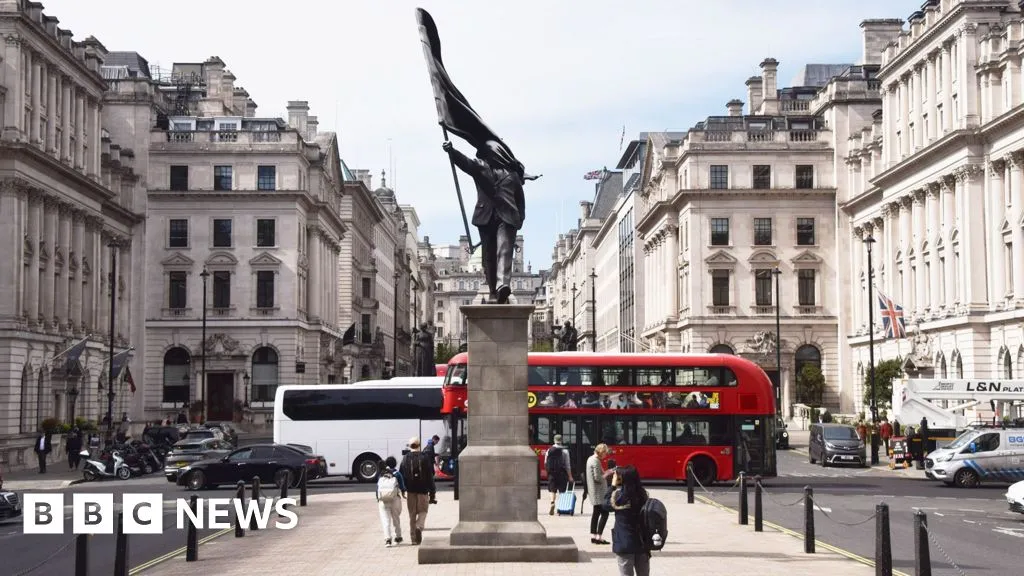
In the early hours of April 30, 2026, a new sculpture by the elusive artist Banksy appeared in Waterloo Place, just a stone’s throw from Buckingham Palace. This striking piece humorously depicts a leader striding off a plinth, blinded by an oversized flag — a visual metaphor that challenges the conventions of traditional statues.
The installation took place quietly, with no fanfare or warning. Local residents awoke to find this unexpected addition to their landscape, nestled between existing statues of King Edward VII and Florence Nightingale. The choice of location is particularly poignant, as it positions Banksy’s work in direct conversation with historical figures celebrated for their leadership.
Banksy confirmed the statue’s authenticity through a witty video shared on Instagram, where he playfully addressed his critics and supporters alike. He remarked on the cleverness of capturing “a very precise moment in time” — one where the leader appears oblivious to the precipice ahead.
Key facts about the statue:
- The statue is made from resin or fibreglass, materials that reflect Banksy’s street art roots.
- Westminster City Council welcomed the installation as part of London’s vibrant public art scene and has no plans to remove it.
- This piece marks a significant departure for Banksy, who is primarily known for his street art rather than large-scale sculptures.
Banksy’s identity remains shrouded in mystery; despite his global fame and artworks fetching millions at auction, he has never publicly revealed who he is. His first creations emerged in Bristol during the early 1990s, laying the groundwork for a career that continues to provoke thought and inspire debate.
The reaction to this latest piece has been mixed but generally positive among art enthusiasts and casual observers alike. One local podcaster described it as “really clever,” noting its ability to encapsulate contemporary political absurdities while simultaneously critiquing established norms surrounding public monuments.
This installation is not just an artistic statement; it raises questions about how we commemorate leaders and the narratives we choose to uphold in our public spaces. As more people flock to see this peculiar figure, it invites them to reflect on the nature of leadership itself.