
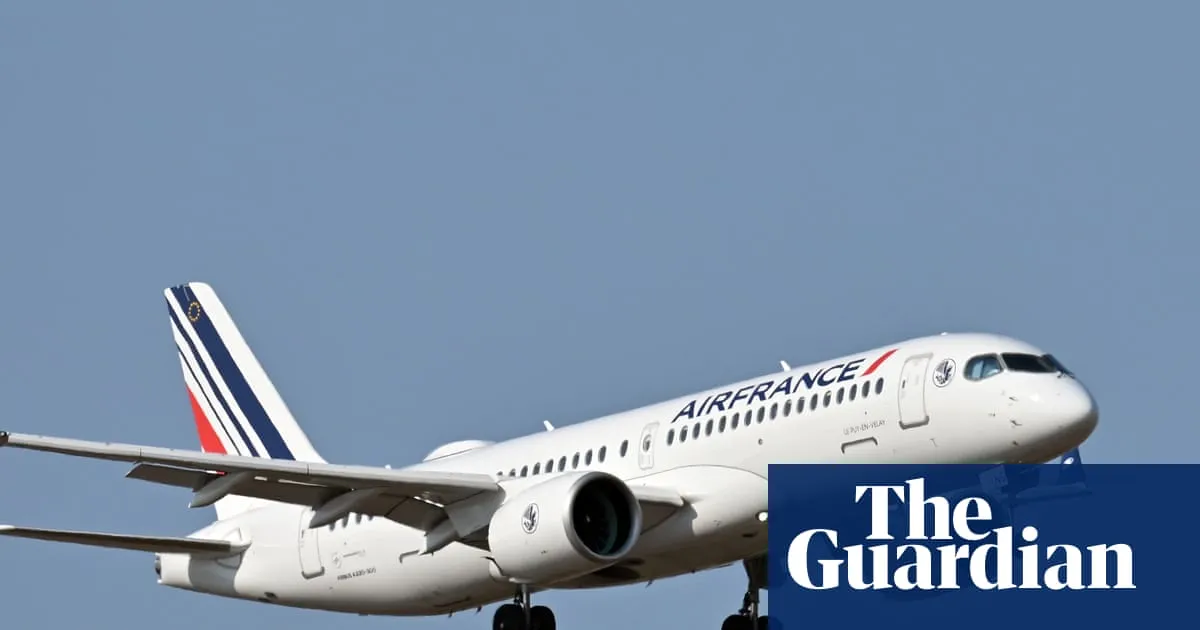
“Fuel price increases were expected to weigh on the coming quarters,” said Ben Smith, CEO of Air France-KLM, as the airline braces for a staggering $2.4 billion increase in its fuel bill this year. The spike in costs, attributed to escalating tensions from the Iran war, has forced the airline to reassess its operational strategies and growth projections.
In light of these developments, Air France-KLM anticipates its total fuel expenses will reach $9.3 billion by 2026, marking a significant rise from previous estimates. This financial strain comes at a time when the airline is already grappling with a first-quarter operating loss of €27 million, which, while better than analysts’ predictions of €389 million, still signals a challenging landscape ahead.
The geopolitical climate has not only impacted fuel prices but has also led Air France-KLM to cut its capacity growth forecast to between 2% and 4% this year, down from an earlier estimate of 3% to 5%. Such adjustments reflect the airline’s need to adapt swiftly in an environment rife with uncertainty.
Yet, amidst these challenges, Tufan Erginbilgiç, CEO of Rolls-Royce, remains optimistic about maintaining profit margins despite rising fuel prices. “We expect to fully mitigate the current financial impact of the disruption to our business,” he stated, hinting at potential strategies such as fuel hedging that could cushion the blow.
Meanwhile, innovation continues in the automotive sector as well. The all-new Mazda CX-5 is set to launch using a groundbreaking 100% second-generation biofuel, developed by SUSTAIN Fuel Technologies. This biofuel is derived from biomass like food and agricultural waste and promises over 80% greenhouse gas savings compared to traditional fossil fuels. Jeremy Thomson from Mazda emphasized the importance of integrating efficient internal combustion engines with advanced biofuels for reducing CO2 emissions.
The interplay between soaring fuel prices and innovative solutions illustrates a broader narrative within industries reliant on energy resources—one where adaptation is no longer optional but essential for survival. As airlines like Air France-KLM navigate through turbulent skies, their responses may redefine operational norms in aviation.
This situation not only affects immediate financial forecasts but also poses long-term implications for sustainability practices across sectors. The move towards biofuels could signify a shift in how companies approach their carbon footprints amid rising scrutiny over greenhouse gas emissions.
The future landscape remains uncertain; however, what is clear is that both airlines and automotive manufacturers are at a critical juncture where strategic decisions will shape their paths forward in an increasingly volatile world.