
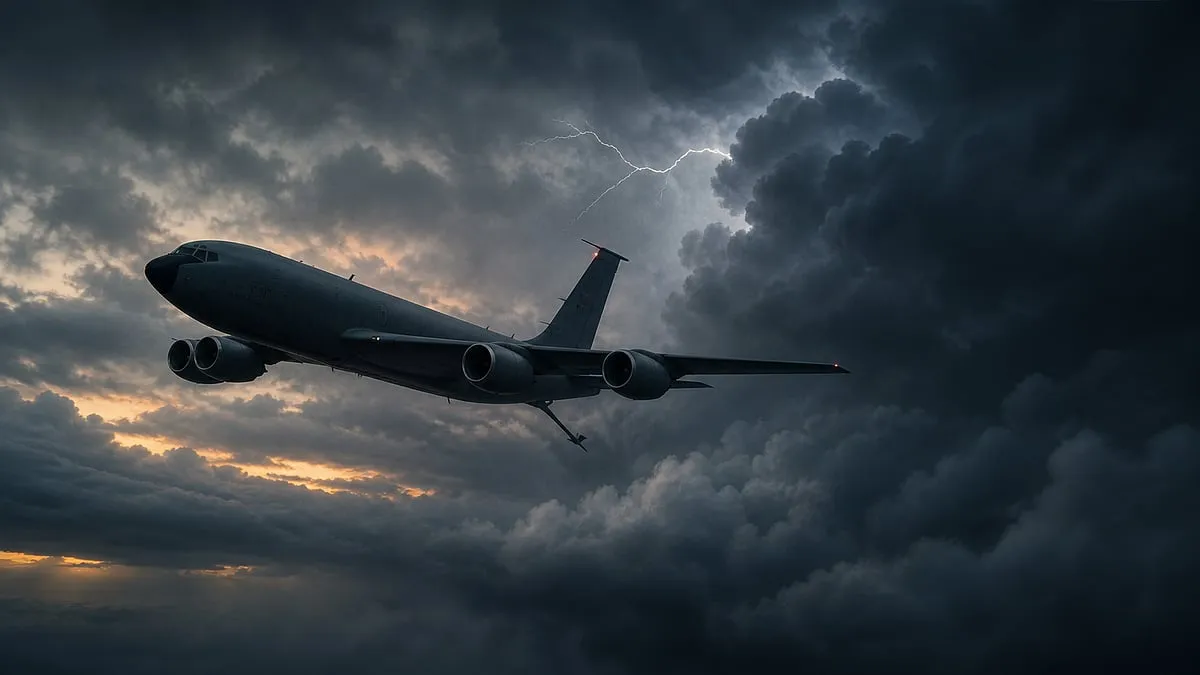
A US Boeing KC-135 Stratotanker issued a ‘7700’ distress signal over the Persian Gulf, prompting immediate concern as it lost contact during a routine aerial refueling operation. The incident unfolded shortly after the aircraft had departed from Al Dhafra Air Base in the United Arab Emirates.
The aircraft’s transponder signal vanished approximately one hour after declaring an in-flight emergency. Eyewitness accounts suggest that the KC-135 was observed altering its course and beginning a descent toward Qatar before its signal was lost.
This incident is particularly alarming given the strategic significance of the area—the Strait of Hormuz, a vital maritime route for global oil shipments, has been a focal point of military operations and heightened tensions in recent years. The KC-135 Stratotanker, which has been integral to US Air Force operations for over 60 years, plays a crucial role in extending the operational range of military aircraft.
Key facts about the incident:
- The KC-135 issued a ‘7700’ distress signal, indicating serious issues such as mechanical failure or external threats.
- Military pilots may disable transponders for security reasons, complicating recovery efforts.
- Hundreds of KC-135 aircraft are still in service across various branches of the US military.
The precise cause of the emergency remains unknown, and there has been no official confirmation linking the incident to any hostile activity. Aviation experts caution against jumping to conclusions; while the combination of an emergency code and sudden signal loss is concerning, they emphasize that assumptions should not be made until military assets can confirm the aircraft’s location.
As officials continue to assess the situation, uncertainty lingers over both the cause of the emergency and the status of the crew aboard. The aircraft’s disappearance raises pressing questions about safety protocols and operational readiness in a region marked by instability.