
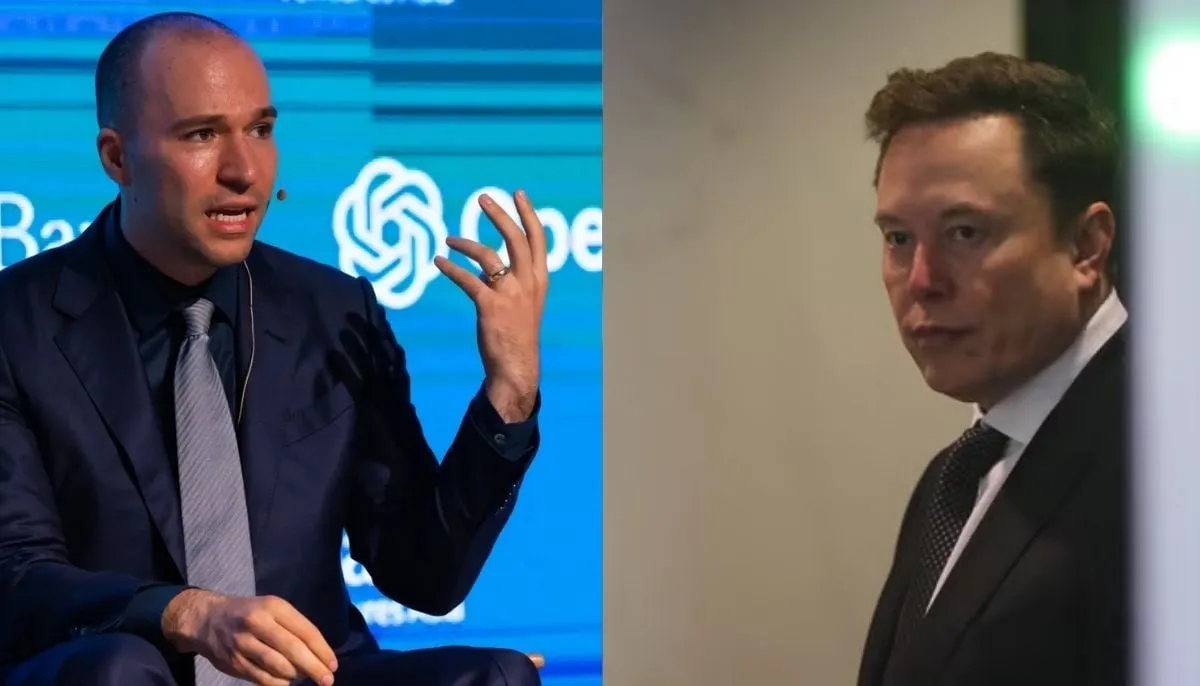
“He said he needed $80 billion to create a city on Mars,” testified Greg Brockman, president of OpenAI, as tensions mounted in a California courtroom. The stakes were high: Elon Musk’s audacious vision for Mars colonization now hung in the balance, intricately tied to the very leadership of OpenAI.
In this ongoing trial, Musk has accused OpenAI of defrauding him out of $38 million, a claim that has sent ripples through both the tech and space industries. The courtroom buzzed with anticipation as Brockman recounted Musk’s desires for complete control over OpenAI—a move he believed essential for securing the necessary funding for his Martian ambitions.
The backdrop is as complex as it is thrilling. SpaceX, founded by Musk, has long been at the forefront of interplanetary travel innovations. With plans to establish a human settlement on Mars by 2030, Musk’s vision requires not just technological breakthroughs but also substantial financial backing. To achieve this, he estimates that an investment of $80 billion is crucial.
Current mission profiles:
- Travel times to Mars currently span approximately 7 to 10 months.
- A new study suggests astronauts could potentially complete a round trip in just 153 days during optimal alignments in 2031.
- The next viable opportunity for rapid travel to Mars using near-term technology is projected for 2031.
As the trial unfolds, experts are watching closely. Marcelo de Oliveira Souza, an astrophysicist involved in interplanetary studies, remarked during a recent conference, “This was a surprise for me — I was not looking for this.” He added, “Maybe this can change the idea that we need more than two years to go to Mars and return.” Such advancements could redefine timelines and expectations surrounding space exploration.
The implications of this trial extend beyond financial disputes; they touch on the very future of AI development and its intersection with space exploration. OpenAI plans to allocate $50 billion towards computing resources in 2026 alone—an investment that underscores the importance of artificial intelligence in achieving ambitious goals like those set by Musk.
The courtroom will reconvene soon, with further testimonies expected that may shed light on how intertwined these two pioneering entities truly are. As they grapple with issues of control and funding, the world watches—hoping that humanity’s dream of reaching Mars becomes a reality rather than just an aspiration.