
DR Congo’s World Cup Journey and Historical Context
The Democratic Republic of Congo (DR Congo) is set to face England in the World Cup 2026 last 32 on Wednesday, marking a significant moment for the nation’s footballing aspirations. This match represents DR Congo’s first appearance in the knockout stages of the tournament, 52 years after their initial World Cup participation in 1974. The country, then known as Zaire, made history as the first sub-Saharan African nation to qualify for the finals.
The 1974 campaign saw Zaire endure three defeats, conceding 14 goals and failing to score. Their final group match against Brazil included a notable incident where defender Mwepu Ilunga kicked the ball away during a free-kick, an act he later revealed was a protest against unpaid allowances from FIFA that players believed football federation officials had misappropriated. Reserve goalkeeper Mohamed Kalambay stated in 2022 that the team lacked morale due to these bonus issues.
Later in 1974, the capital Kinshasa hosted the historic boxing match between Muhammad Ali and George Foreman, known as the ‘Rumble in the Jungle’. This event, secured by President Mobutu Sese Seko, placed the country on the global stage. Journalist Justin Kabala Mwana, who covered the bout, views the upcoming match against England as an opportunity for DR Congo to regain unity and dignity, much like the ‘Rumble in the Jungle’ did for the country’s international profile.
After gaining independence from Belgium in 1960, Mobutu seized power in 1965, renaming the country Zaire six years later. Despite economic struggles, the nation’s football teams achieved continental success, winning three African club titles between 1967 and 1973, and the Africa Cup of Nations (Afcon) in 1968 and 1974. President Mobutu supported the 1974 squad, providing houses and cars, and overseeing their preparations.
Current Squad and Tactical Approach
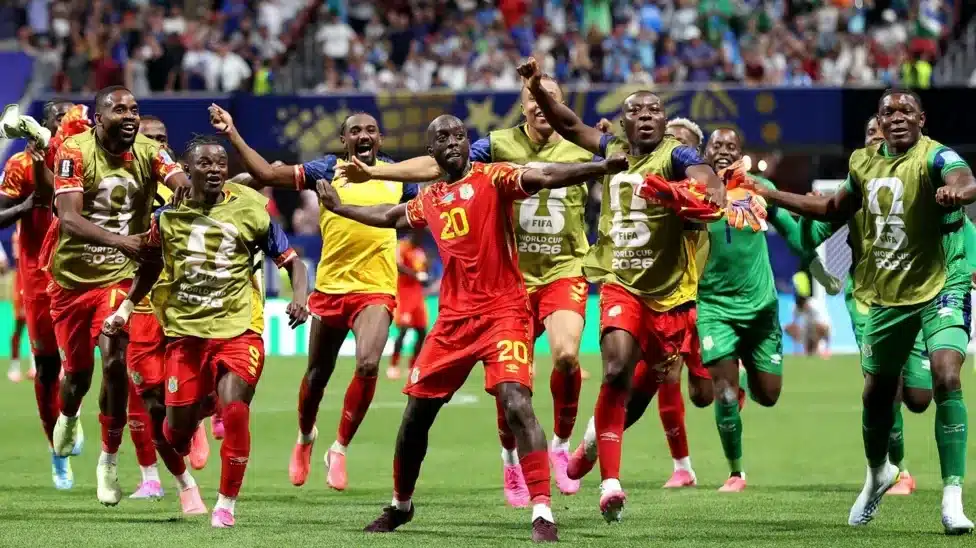
The current DR Congo squad has made significant strides, achieving their first World Cup goal and point against Portugal in their opening game, followed by a victory against Uzbekistan to secure passage to the knockout stage. This marks their most successful period in a generation. The team has been bolstered by recruiting players from its diaspora, with only six members of the squad born in DR Congo.
Under French coach Sebastien Desabre, who took charge in 2022, the team has shown consistent selection and strong team spirit. Desabre’s tactical approach focuses on a resilient defence, aiming to avoid defeat. His side has not been beaten by more than one goal during his tenure. In their initial group games against Portugal and Colombia, Desabre deployed a back five with three central midfielders and two forwards, with wing-backs Aaron Wan-Bissaka and Arthur Masuaku maintaining disciplined roles.
DR Congo’s strategy often involves surrendering possession and inviting opponents onto their defensive block before launching counter-attacks. This style proved effective in earning a point against Portugal, a team many considered pre-tournament favourites. The team’s defence, particularly with captain Chancel Mbemba and Axel Tuanzebe, managed to contain players like Cristiano Ronaldo, limiting Portugal to one shot on target. Goalkeeper Lionel Mpasi also delivered a strong performance against Colombia.
Despite a conservative approach, DR Congo possesses attacking threats. Yoane Wissa has scored three goals in the tournament, including two against Uzbekistan. Cedric Bakambu of Real Betis has featured upfront, and Fiston Mayele, named the men’s Interclub African Player of the Year, provided composure in front of goal when introduced against Uzbekistan. Desabre’s adaptability was also evident in the Uzbekistan match, where a switch to a flat back four and the introduction of wingers Nathan Mbuku and Brian Cipenga proved successful.
Connections to England and Upcoming Challenge
The upcoming match holds particular significance due to the strong links between DR Congo and England, primarily through players with Congolese heritage who have developed their careers in England. Axel Tuanzebe, born in Bunia, Congo, moved to Rochdale at a young age and played for Manchester United, also representing England at youth level. Aaron Wan-Bissaka was born and raised in south London and was included in an England squad in 2019. Other players like Aaron Tshibola, formerly of Aston Villa, and Arthur Masuaku, who played for West Ham, also have connections.
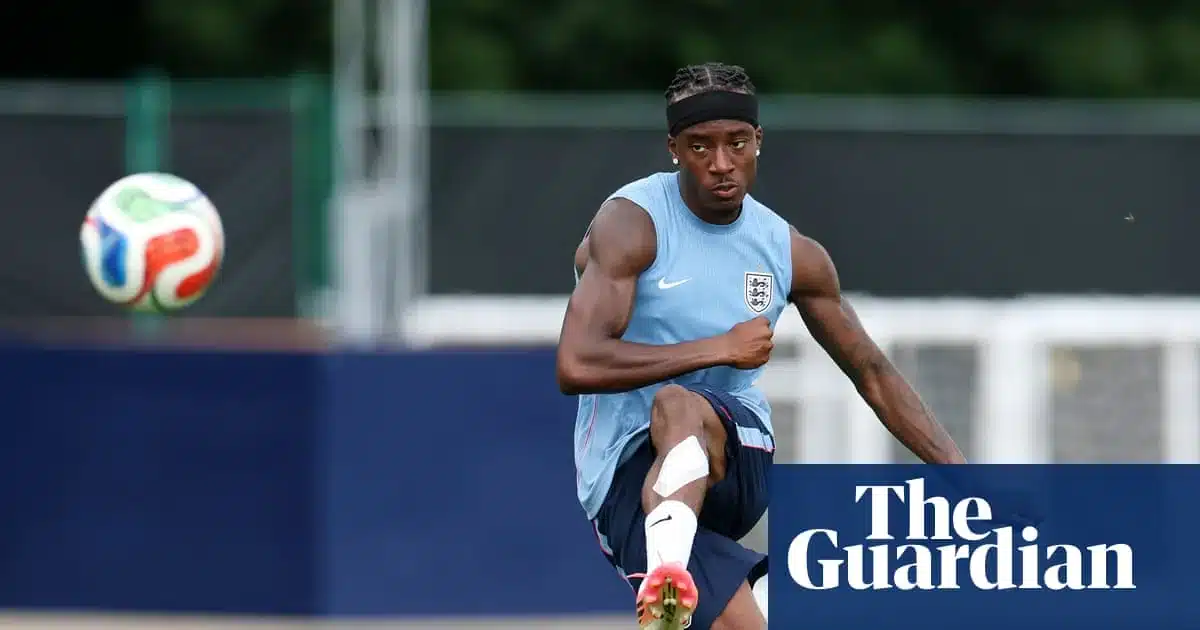
Noni Madueke of England has cautioned against underestimating DR Congo, acknowledging the presence of several Premier League players in their squad, including Newcastle’s Yoane Wissa and Noah Sidiki of Sunderland. Madueke anticipates a challenging encounter, stating that at this stage of the World Cup, no opponent can be taken lightly. He expects DR Congo to employ a counter-attacking style, similar to Ghana, which caused difficulties for England in a previous group stage match.
England’s manager Thomas Tuchel faces a challenge in breaking down DR Congo’s resolute defence, a style that differs significantly from England’s. Madueke noted that many top nations struggle against teams that defend with eleven players in a compact space. The match is scheduled for Wednesday in Atlanta.
Source: bbc.com