

England’s ODI Challenges and Adaptability
England’s cricketers secured a four-wicket victory over India in Cardiff, levelling the One-Day International series at one-all. The win sets up a decisive match at Lord’s. This hard-fought win was achieved on a challenging surface where the ball occasionally stopped, making batting difficult. Despite the victory, concerns remain about the team’s experience in 50-over cricket.
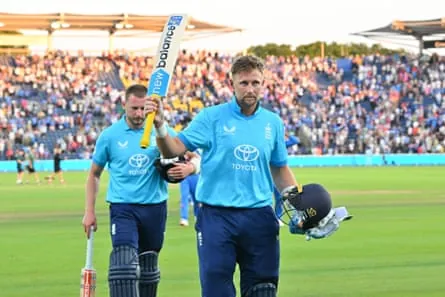
Joe Root, who scored an unbeaten 99, highlighted that some players are compelled to “learn on the job” due to limited exposure to the 50-over format. This situation arises partly because the One-Day Cup in domestic cricket coincides with The Hundred, leading to the former becoming more of a developmental competition. The top six batters for England in Thursday’s match had collectively played over 400 fewer List A matches (which includes ODIs and major domestic white-ball competitions) than their India counterparts.
Root, at 35, noted that the lack of extensive 50-over experience among new players is a significant challenge. He explained that there isn’t the same level of foundational grounding in this format before reaching the international stage, unlike in other parts of the world. This means players often have to adapt quickly and learn during competitive matches.
The match itself was a more traditional ODI, with England chasing a target of 234 runs. Root’s innings, alongside Virat Kohli’s 65 for India, focused on strike rotation and punishing loose deliveries. This style contrasted sharply with the aggressive batting often seen from England’s 2019 World Cup-winning squad, but Root emphasised the importance of adaptability.
He stressed the need for batters to be brave, absorb pressure, and recognise that they often have more time than they perceive. Root believes that having a diverse range of gears makes a player more effective in the long run. He acknowledged that while some pitches might be conducive to high scores, players must also be able to “do it ugly” and secure wins in difficult conditions.
Key Performances and Team Dynamics
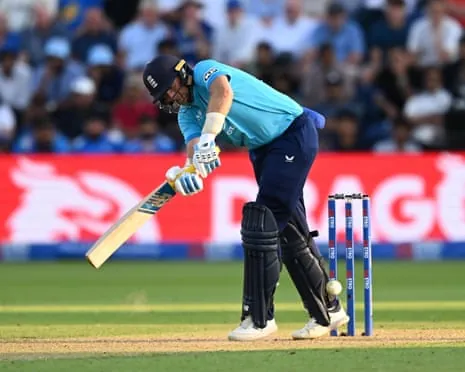
England’s victory was largely thanks to Root’s composed innings. He came to the crease early after Jasprit Bumrah dismissed Ben Duckett on the second ball of the chase. Root’s 133-ball performance was crucial, as wickets fell around him. Jacob Bethell, who has played 23 ODIs, scored four before being dismissed, while Harry Brook, the England captain, was out for 16.
Brook’s dismissal, attempting an ambitious ramp shot, was described as not the “prettiest,” but his captaincy in marshalling the bowlers was effective. Jofra Archer was a standout bowler for England, taking three wickets for 47 runs, contributing to India’s total of 233 in 44 overs. Gus Atkinson also impressed with figures of three for 50 and later contributed an unbeaten 23 runs with the bat.
Support for Root came from Will Jacks, who scored 30 runs from 44 balls, forming a 72-run partnership for the sixth wicket. Jos Buttler, with 201 ODI caps, and Root, with 191, are the only remaining batters from England’s 2019 World Cup-winning team. Root expressed optimism that this new group can still achieve similar success.
India’s innings saw Shreyas Iyer score 66 runs from 71 balls, including five fours and two sixes, providing some stability after early wickets. Rohit Sharma, according to one report, may be nearing the end of his ODI career, with the Lord’s match potentially being his last. His innings of 26 runs in Cardiff did not significantly alter the team’s fortunes.
Looking Ahead to the Series Decider
England’s recent ODI form has been inconsistent, with 14 losses in their last 20 matches, including the series opener at Edgbaston. They are currently ranked eighth globally and need to remain in the top nine to ensure automatic qualification for the 2027 World Cup. Root hopes the team will be judged on their recent ability to adapt and learn from past mistakes.
He referenced an earlier series against Sri Lanka this year, where England adapted quickly after an initial setback to win the series, a feat not achieved by any other team in four years. Root acknowledged that in the Edgbaston match, they did not assess the situation or surface as quickly as desired but learned from it for the Cardiff game.
The team’s top order has been a concern, as they continue to search for a consistent opening partner for Ben Duckett. The upcoming series decider at Lord’s against India is anticipated to be a high-pressure fixture, especially with the World Cup approaching. Root believes that if the team continues to develop and understand different match situations, they will be in a strong position by the time the World Cup arrives.
He drew parallels with the build-up to the 2019 World Cup, where a consistent group of 15-16 players played together regularly. While this level of consistency is not yet present, Root sees no reason why the current squad cannot learn and develop similarly, given the available resources. The series decider against India is scheduled for Sunday at Lord’s.
Source: bbc.com