
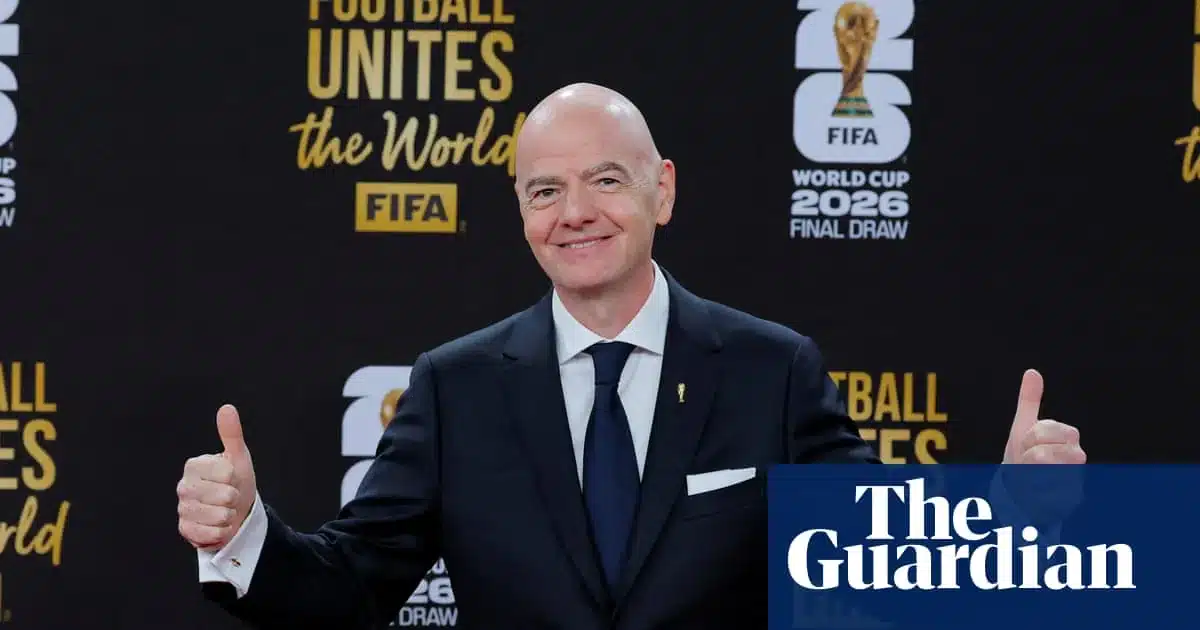
European Football’s Stance on Fifa Proposals
Uefa and its 55 member associations have collectively voted to boycott World Cups and other Fifa competitions if the sport’s governing body moves forward with its plan to sell stakes in its events to private investors. This decision was made during an emergency virtual meeting, chaired by president Aleksander Ceferin, to discuss Fifa’s proposal.
The opposition from Uefa has been clearly stated through multiple announcements. The organisation emphasised that the World Cup should not be treated as an investment product, highlighting its legacy built by players, national teams, and supporters over generations. The statement asserted that no part of the competition should be surrendered to private investors, declaring, “The World Cup is not for sale.”
The boycott would encompass all Fifa competitions, including the men’s and women’s World Cups and the Club World Cup. This action would be triggered if Fifa president Gianni Infantino’s proposals are approved by member associations. The first instance where this stance could be tested at a senior tournament is in October, during the scheduled Women’s World Cup play-offs.
Details of Fifa’s Investment Plan
Fifa’s plan involves establishing a commercial subsidiary, named Fifa Forward Enterprise (FFE), to manage its main events, including the World Cups. External investors would be invited to purchase minority, non-controlling stakes in this new entity. The proposal requires approval through a vote involving Fifa’s 211 members.
Gianni Infantino has communicated to member associations that they would receive $40m if they support his proposal. He set a deadline of 19 September for federations to accept the plans to access an initial $20m. If the plan is approved, Thrive Eternal, an American venture capital firm founded by Joshua Kushner, is expected to lead the proposed investor group for FFE.
A sales document, titled “Fifa Forward Enterprise Member Materials,” outlines that financial growth would be achieved through an expanded tournament portfolio, higher ticket prices, and debt financing. The document, produced by JP Morgan, suggests that the four-year Fifa Forward payments could increase to $24m for each member by the 2035-39 cycle. It also references more than doubling the number of global tournaments held annually, from 200 to 450.
The sales deck also raises the possibility of selling TV coverage of major events, such as the World Cup, to subscription channels or streamers, aiming to “expand and optimize media rights monetization.” Notably, the 25-page document does not contain any mention of women’s football.
Widespread Opposition and Concerns
In its statement following the virtual meeting, Uefa and its 55 member associations declared their unanimous and unequivocal rejection of Fifa’s proposal to transfer ownership interests in the World Cup and other competitions to private investors. Uefa criticised the proposal as being conceived in secret and brought to the brink of approval without meaningful consultation, calling it “irresponsible and indefensible.”
The organisation further stated that this situation is not merely a failure of leadership but an abdication of Fifa’s duty as the custodian of world football. It described the current situation as an ultimatum for national associations: accept the capture of football’s competitions or face consequences, characterising it as “governance by intimidation – an act of coercion.”
The Football Association in England expressed its solidarity with European colleagues, stating that it “fully support[s] the collective view” and opposes Fifa’s plans. The Scottish FA also voiced its support, with its board agreeing “unequivocally with the concerns raised by all members over the manner in which these proposals have been issued, and deadline set, without a full consultation process or consideration to good governance.”
Uefa, despite accounting for a quarter of Fifa’s membership, includes many of the world’s most successful teams. Six of the eight quarter-finalists, including winners Spain, at this summer’s World Cup were European. In the 2022 and 2018 editions, the figures were five and six respectively. Of the 23 World Cups held to date, 13 have been won by European countries. The Women’s Under-20 World Cup is scheduled to begin on 5 September in Poland.
The organisation maintains that once external investors acquire ownership interests, commercial return becomes a permanent obligation, and investor expectations become a daily pressure. This, according to Uefa, would mean that future decisions regarding the international calendar, competition formats, and the future of football would be driven by what best serves shareholders rather than the game itself. Uefa has affirmed that it will never lend its legitimacy to this model.
Source: bbc.co.uk