
Spain secures World Cup victory
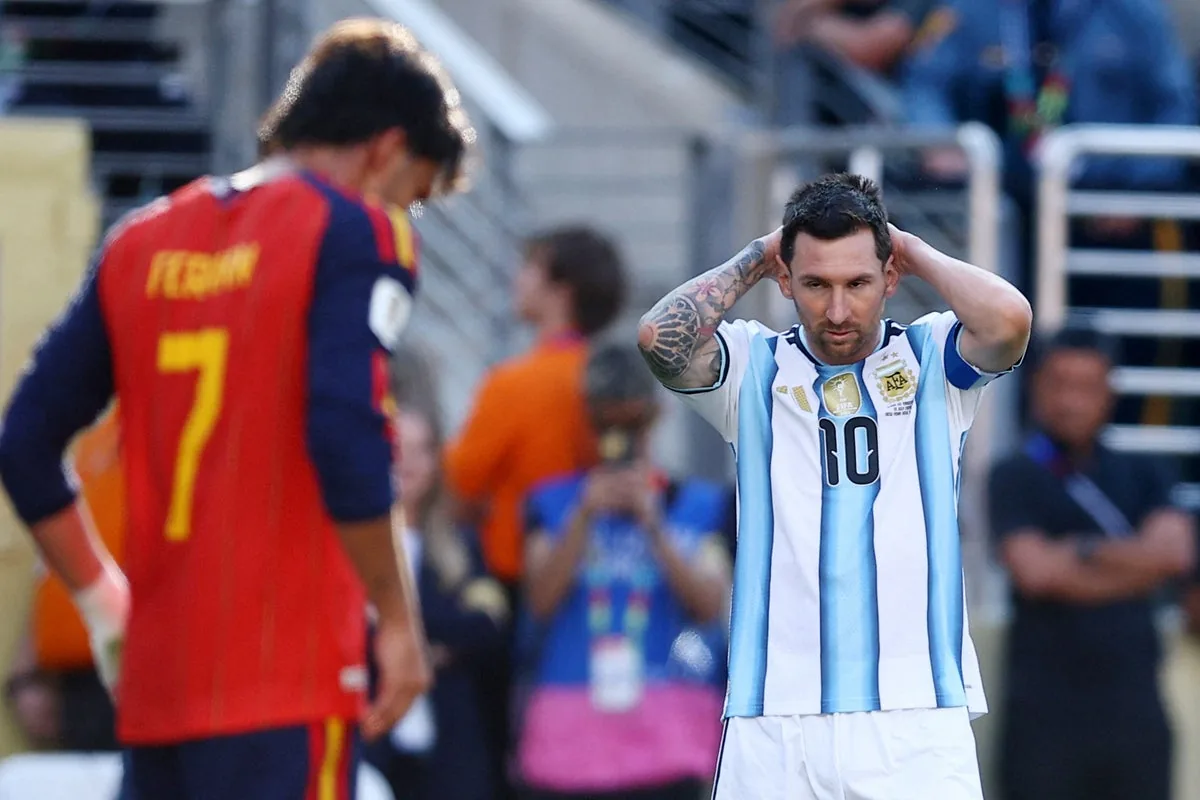
Spain has claimed its second World Cup title, defeating Argentina in a final match that saw Ferran Torres score the decisive goal in extra time. The victory marks a significant achievement for the European champions, who conceded only one goal throughout the tournament.
The winning goal came 37 seconds into the second period of extra time, with Torres connecting with a deep cross from Nico Williams. His shot, recorded at 102km/h, secured the trophy for Spain. This moment was particularly poignant for Torres, who had previously had a goal disallowed by VAR and hit the bar in earlier matches.

The team’s success is attributed to their commitment to an identity and system, which their manager, Luis de la Fuente, refers to as a “family.” De la Fuente consistently maintained that his players were among the best globally, a belief that was ultimately vindicated by their performance.
Challenges faced by the champions
Spain’s path to victory was not without its challenges. Several key players, including captain Rodri and star player Lamine Yamal, were returning from injuries at the start of the tournament. Williams also battled injuries for much of the season and feared he might not participate in the World Cup.
Other players, such as Fabián Ruiz and Aymeric Laporte, also dealt with injuries leading up to the competition. Despite these setbacks, the team demonstrated depth, with players like Eric García and Martín Zubimendi making crucial appearances in the final, having not played a minute previously in the tournament.
The final match itself was affected by several factors. The game experienced delays, including a 27-minute pause between the first and second halves, exceeding the standard 15-minute break. Additionally, the pitch at the New York New Jersey Stadium was described as “bobbly and dry,” which some commentators noted was not ideal for fluid attacking play.
The 3pm ET kick-off time in New Jersey, chosen with European television audiences in mind, meant players competed in the hottest part of the day, with temperatures reaching 27C. This contrasted with semi-final venues that featured retractable roofs and air conditioning, potentially impacting player performance in the exposed outdoor stadium.
Argentina’s performance and post-match events
Argentina, the defending champions, struggled to make an impact in the final. They were unable to register a single shot on goal before Spain took the lead. Their playing style, which involved numerous fouls, led to Enzo Fernandez’s red card shortly before extra time.
Following the final whistle, Leandro Paredes was also sent off after an altercation involving Spain’s Eric Garcia and Gavi. This incident contributed to a chaotic end for Argentina’s tournament campaign.
Despite the overall excitement of the tournament, the final match was described by some as lacking drama. This is not uncommon for major finals, where high stakes and pressure can often lead to more cautious play, as seen in previous World Cup finals such as Germany’s 1-0 victory over Argentina in 2014 and Spain’s 1-0 win against the Netherlands in 2010.
Ferran Torres’s goal, scored at 5:42pm eastern daylight time, secured Spain’s second World Cup title.
Source: theguardian.com