
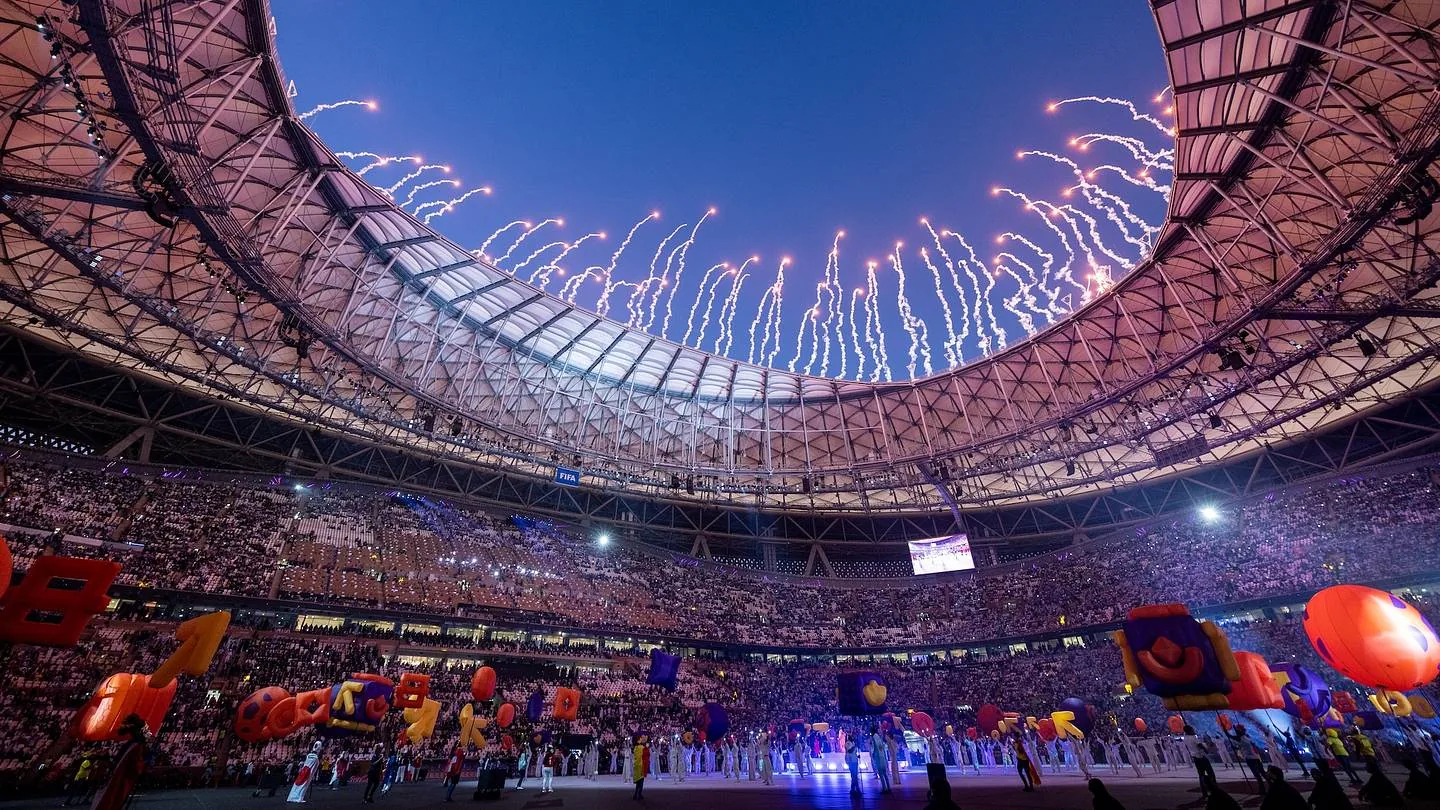
The recent World Cup has concluded with significant engagement from audiences, with millions tuning in for live match coverage and digital content. Across various platforms, the tournament garnered substantial viewership and interaction, indicating a strong connection with fans throughout the competition.
Live match coverage on television and streaming services saw 42.8 million people engaging with the action. These games were streamed 237 million times across platforms including iPlayer, the BBC Sport app, and the website. Specific matches drew large audiences, such as the England v Argentina semi-final, which was watched by 24 million viewers. The late-night fixture between England v Mexico attracted 9.1 million people who stayed up until 4 am, while 2.4 million watched Scotland defeat Haiti during the night. Even the Iran v New Zealand match, broadcast at 2 am, drew half a million viewers.
Digital Engagement and Innovation
Beyond live matches, digital content played a crucial role in audience engagement. The iPlayer platform and the BBC Football YouTube channel offered eight-minute highlight packages daily, leading to the biggest ever day and week in iPlayer’s history. Digital platforms, including the app and website, recorded 57.2 million unique browsers who used them 1.7 billion times. This usage included watching clips, interviews, and journalism, following live pages, and reading stories from journalists covering various aspects of the tournament, from tactical trends to off-field events.
Innovative features also saw considerable use. A new 3D tool, which allowed users to experience the game from a player’s perspective, was utilised almost five million times. This demonstrates a willingness from audiences to engage with new technologies that enhance their viewing experience. Additionally, millions tuned into games on Radio 5 Live or BBC Sounds, highlighting the continued importance of audio coverage for fans on the move. The visualised Football Daily podcast also reached a wider audience than ever before.
Social and digital content saw over two billion swipes over six weeks. This included behind-the-scenes footage, interviews, and tactical dissections on YouTube. Personalities such as Harry Kane, Olivier Giroud, Wayne Rooney, Joe Hart, and Micah Richards featured in various content pieces, contributing to the high levels of interaction.
World Cup Final Viewership
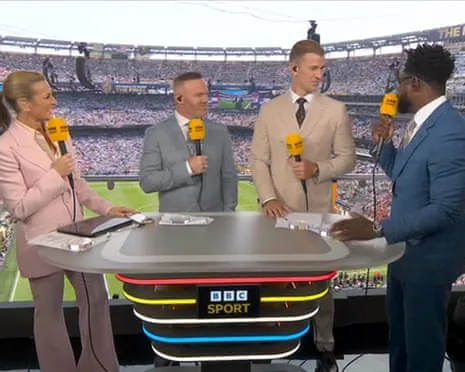
The World Cup final between Spain and Argentina garnered significant attention, with audiences showing a clear preference for one broadcaster over another. An average audience of 9.7 million viewers watched the final, while another broadcaster recorded 2.4 million. This outcome was similar to the viewing figures from the final four years prior. The main coverage, presented by Gabby Logan and featuring pundits Alan Shearer, Micah Richards, Joe Hart, and Wayne Rooney, peaked at 13.6 million viewers. Guy Mowbray provided commentary for this broadcast.
In contrast, the rival broadcaster’s coverage, presented by Mark Pougatch and including pundits Gary Neville, Ian Wright, and Roy Keane, peaked at 3.4 million viewers. Sam Matterface was the commentator, joined by Lee Dixon as an expert summariser. The viewing figures for the final indicate that the gap between the two broadcasters did not close compared to four years ago, when the average audience was 9.2 million for one and 2.8 million for the other.
The decision not to cover the tournament from the US until its very late stages was a point of discussion, with the choice to use a new set in Salford being compared to the rival’s Brooklyn studio. However, the absence of advertisements is widely believed to give one broadcaster a significant advantage. Despite this, the rival broadcaster received praise for bringing in pundits like Neville and Keane, who attracted viewers from their podcast. The overall response to the coverage was described as extraordinary, with the goal of being present for audiences at every stage of the tournament.
Global Reach and Future Projections
The FIFA World Cup final consistently ranks among the most-watched global sporting events. The 2022 World Cup final, which saw Argentina defeat France, was watched by an estimated 1.5 billion people worldwide. This figure positions it as one of the most-watched sporting events in history, surpassing events like the 2015 Cricket World Cup clash between India and Pakistan, which attracted around one billion viewers. The opening ceremony of the 2008 Beijing Olympics also drew an audience of approximately one billion, according to one estimate.
| Position | Event | Viewership | Source |
|---|---|---|---|
| 1. | 2022 FIFA World Cup Final | 1.5 billion | Discovery UK |
| =2. | Pakistan vs. India, 2015 Cricket World… | ~1 billion | The Guardian |
| =2. | 2008 Beijing Olympics Opening Ceremony | ~1 billion | Reuters |
| 4. | 2006 FIFA World Cup Final | 750 million | FIFA |
| 5. | 2005 FA Cup Final | 484 million | The FA |
Looking ahead, the 2026 World Cup is anticipated to set new viewership records. The opening matches in the United States, Canada, and Mexico collectively attracted over 50 million viewers across the three host nations, marking a record start for soccer in North America. The expanded 48-team format is expected to contribute to record crowds in stadiums throughout the tournament. The final of the 2026 World Cup is projected to reach a global television audience of approximately 1.8 billion viewers. This expected increase is attributed to the larger tournament format, which includes more nations and fanbases, as well as scheduling designed to maximise viewing opportunities across the Western Hemisphere. The Euro 2028 tournament, hosted in the UK and Ireland, will not present the same broadcast location decision.
Source: bbc.co.uk