
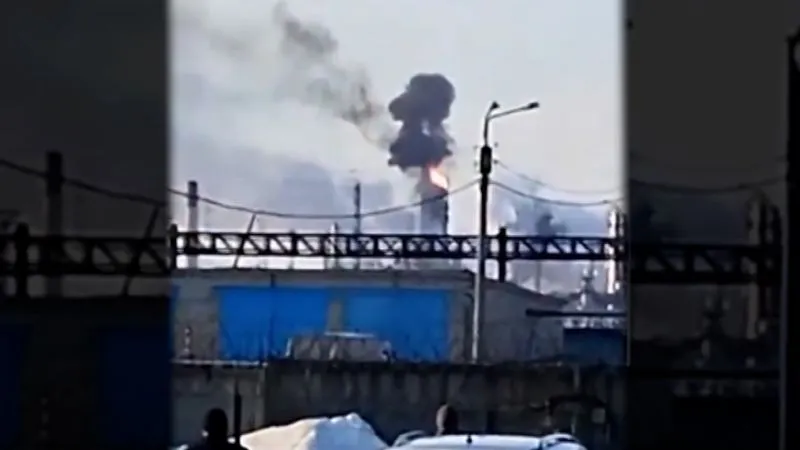
On May 1, 2026, Ukrainian drones struck the Tuapse oil refinery for the fourth time in two weeks, reigniting fires and causing substantial environmental damage. This surge in attacks raises critical questions about the resilience of Russian oil infrastructure amidst ongoing conflict.
The Tuapse refinery, located in Krasnodar Krai, processes approximately 12 million tons of oil annually. The recent assaults have already led to the destruction of 24 storage tanks and damage to four more. Following the third attack, a state of emergency was declared in the municipal district, highlighting the severity of the situation.
In response to these drone strikes, Russia’s Emergency Situations Ministry claimed to have extinguished fires at the refinery on April 29. Yet, explosions and active gunfire were reported during the latest attack on May 1. Local residents noted that at least 10 drones were downed by air defense units over Tuapse as chaos engulfed the area.
April 2026 saw a marked increase in Ukrainian strikes on Russian oil infrastructure, with at least 21 attacks recorded throughout the month. This uptick has reduced Russia’s average refinery capacity to 4.69 million barrels per day, the lowest level since December 2009. The environmental fallout from these attacks, including airborne petroleum byproducts and oil spills on city streets, has rendered Tuapse unsafe for visitors.
Photos and videos of the fourth attack emerged on social media shortly after it occurred, further illuminating the ongoing turmoil. Amidst this backdrop of conflict, President Putin proposed a temporary truce during the upcoming May 9 holiday, although it remains uncertain whether such a ceasefire will materialize.
The situation continues to evolve rapidly, and while officials have not disclosed specific details regarding future security measures or operational adjustments at the refinery, one thing is clear: Ukraine’s strategy targeting Russian energy assets shows no signs of abating.