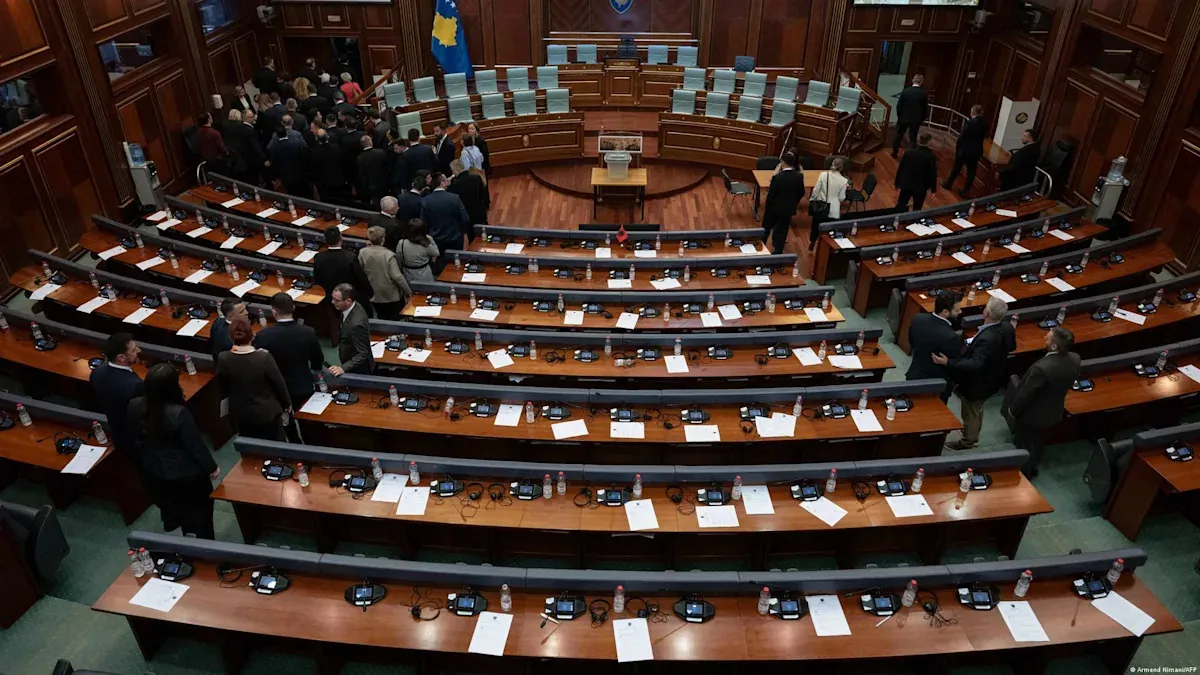
“We would like to see all political groups cooperate for the best interests of the people of Kosovo,” stated a US State Department spokesperson, encapsulating the urgency of Kosovo’s current predicament. The nation is bracing for snap elections on June 7, 2026, after its parliament was dissolved due to an inability to elect a new president by the deadline.
Albin Kurti’s government currently operates on a caretaker basis, caught in a web of political tension and instability that has gripped Kosovo since February 2025. The dissolution came amidst rising frustrations as Vjosa Osmani, who aimed for re-election, found herself unsupported by Kurti, highlighting fractures within their previously ad hoc alliance.
The historical context amplifies the significance of these elections. Just six months prior, on December 28, 2025, Kosovo held elections with only a 45 percent voter turnout—a stark reflection of public disillusionment. This upcoming election marks the third within just over a year, raising alarm bells about the sustainability of its democratic institutions.
Key facts:
- Kosovo’s parliament was dissolved after failing to elect a president by the required deadline.
- The Central Election Commission has allocated a budget of 10,887,000 euros for these early elections.
- The election campaign will run from May 28 to June 7, lasting only ten days.
- Political parties must declare their participation between May 2 and May 7.
The ongoing political deadlock not only undermines trust in Kosovo’s institutions but also stymies its aspirations for EU integration and meaningful dialogue with Serbia. Ehat Miftaraj pointed out that this impasse raises questions internationally regarding Kosovo’s foreign policy coherence.
In a somewhat lighter note amidst this turmoil, the Albanian veterans’ national team is scheduled to face off against the Kosovo veterans’ team on May 3, 2026—a friendly match celebrating Kosovo’s admission to UEFA. Yet such events cannot overshadow the pressing need for political resolution.
The stakes are high as Kosovo navigates this turbulent period. With 120 seats in parliament and only 66 votes available to Kurti’s party—well short of the 80 needed for presidential election—the path forward remains fraught with uncertainty. As citizens prepare to head back to the polls once again, both local and international observers will be watching closely.
The next ruling is expected on May 12 in Lisbon as Kosovo grapples with its political future amid mounting challenges.