
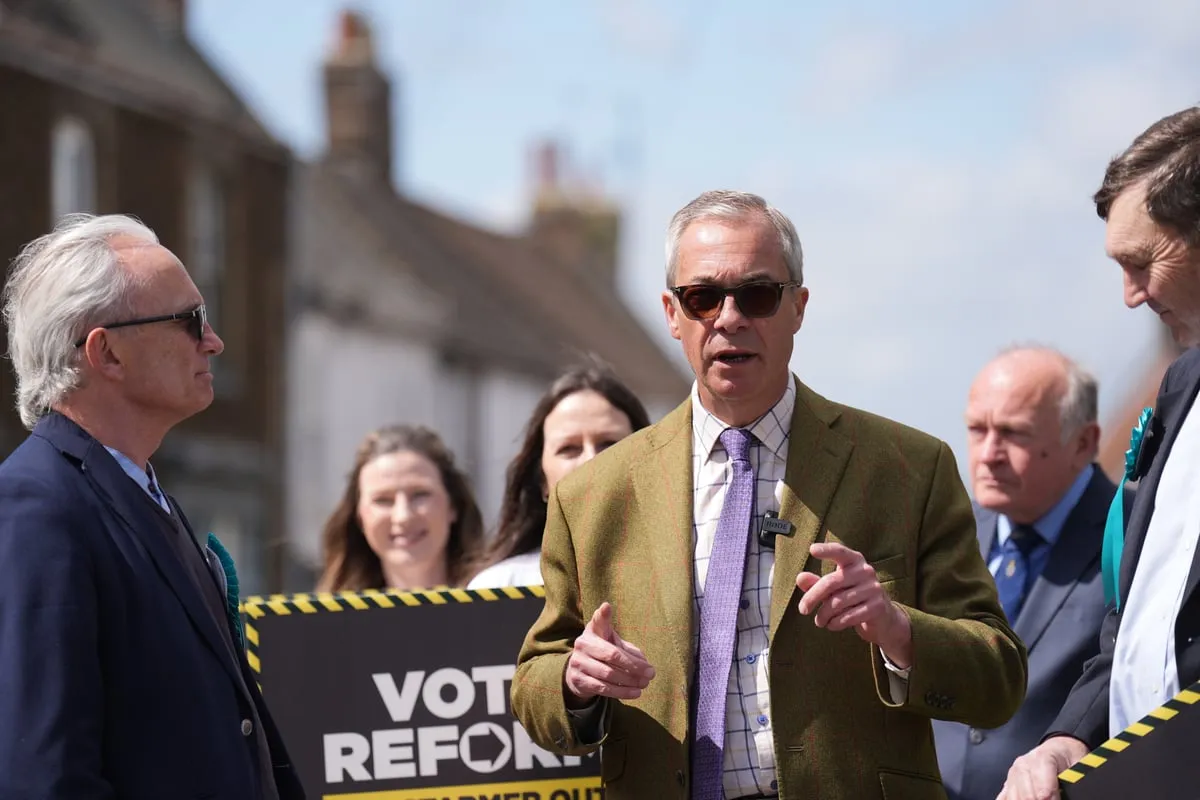
In early 2025, Nigel Farage revealed that his home had been firebombed, an alarming incident that underscores the risks faced by politicians today. This attack not only raises concerns about security for MPs but also casts a shadow over Farage’s financial dealings.
The petrol bomb attack occurred shortly before a series of arson incidents targeting properties linked to Sir Keir Starmer, heightening tensions in the political landscape. Police launched an investigation into the firebombing, yet no suspects have been identified.
Earlier in 2024, during the general election campaign, Farage faced another assault—this time in the form of a milkshake thrown by activist Victoria Thomas Bowen. Her actions resulted in a sentence of 13 weeks in prison, alongside a suspended sentence of 12 months.
In response to these threats, Farage received a substantial gift of £5 million from billionaire Christopher Harborne, intended for security measures. However, this has sparked controversy as Farage stated there was no obligation to declare this gift in the register of interests for MPs.
Key developments:
- Farage’s home firebombed in early 2025.
- Harborne’s £5 million gift raised questions regarding transparency.
- No suspects identified in the police investigation.
- Farage previously attacked with a milkshake during the 2024 campaign.
- Conservatives referred him to the parliamentary standards commissioner over the gift.
Farage has claimed he is “the most attacked politician of modern times,” a statement that resonates with many who observe the increasingly hostile environment surrounding political figures. As he navigates these challenges, he insists that “the rules are very clear” regarding financial disclosures.
The House of Commons code of conduct mandates that new MPs register all financial interests within one month of their election. Yet, questions linger about whether Farage’s actions align with these regulations amidst rising scrutiny from both peers and the media.
This sequence of events not only highlights the precariousness of political life but also raises broader questions about accountability and security within British politics. With ongoing investigations and mounting pressure from various fronts, how this will unfold remains uncertain.