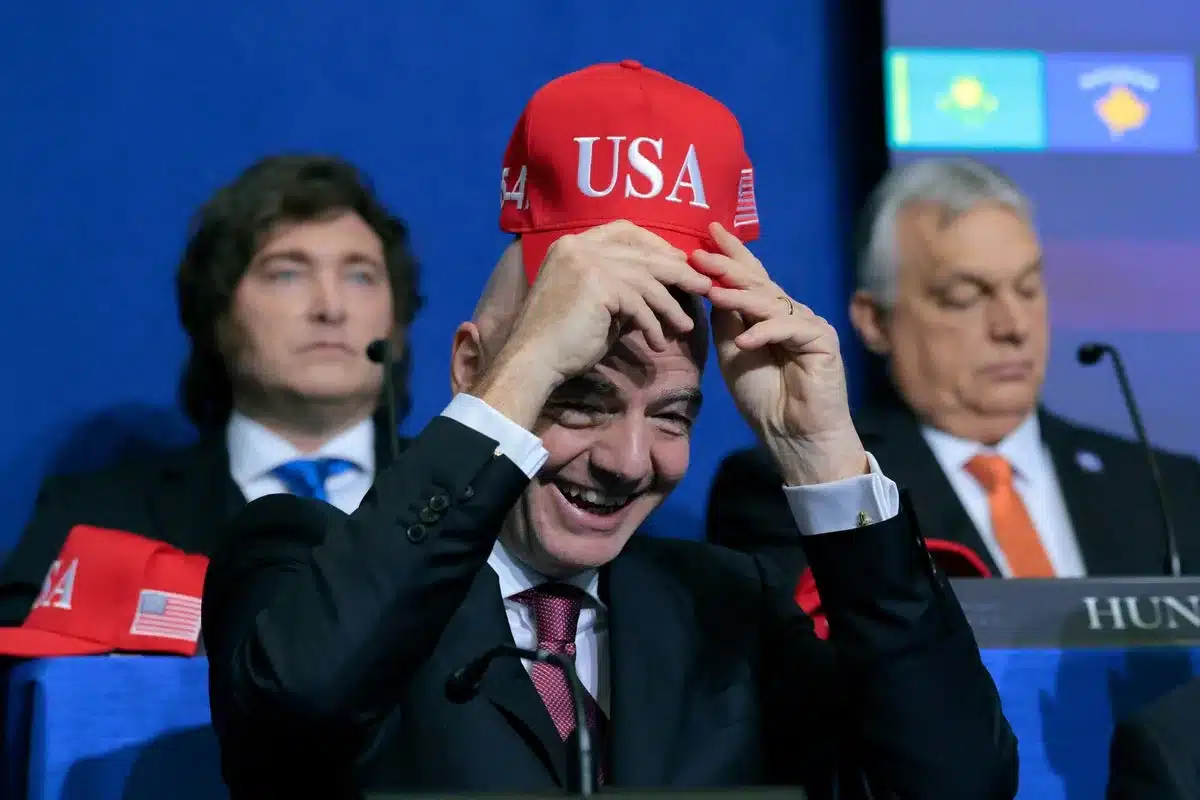
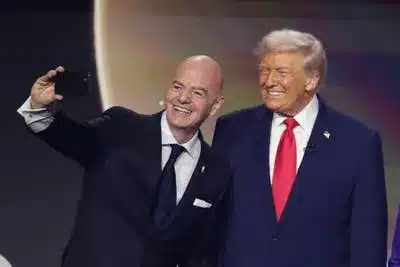
A recent defeat for the United States Men’s National Team (USMNT) against Belgium has brought renewed scrutiny to the relationship between FIFA president Gianni Infantino and former President Donald Trump. The match outcome, a 4-1 loss for the US, occurred shortly after a controversial decision by FIFA to suspend a one-game ban for USMNT player Folarin Balogun.
The controversy intensified when reports emerged that Trump and his associates, including commerce secretary Howard Lutnick and World Cup White House Task Force director Andrew Giuliani, had intervened on Balogun’s behalf. Trump publicly confirmed his call to Infantino, stating he requested a review because he did not believe it was a foul and felt that preventing a top US player from participating would “stain” the World Cup.
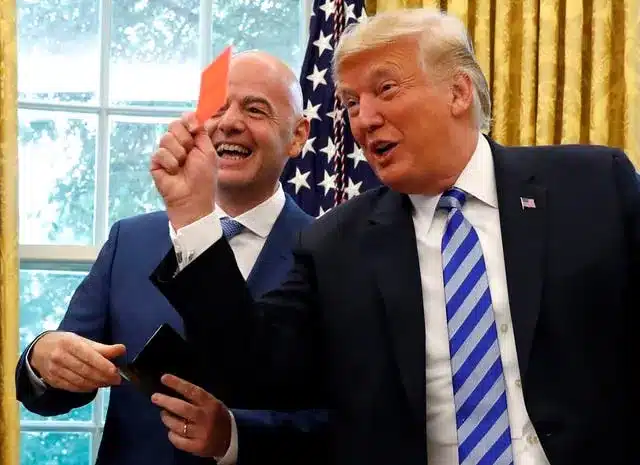
FIFA maintained that its judicial bodies are independent and operate autonomously, but did not provide a clear justification for overturning a decision initially deemed serious foul play. This lack of explanation, coupled with Trump’s public statements, led to widespread criticism from European football federations.
International backlash and concerns
The decision to suspend Balogun’s ban sparked anger across the Atlantic, with several European football associations expressing strong disapproval. Belgium coach Rudi Garcia stated his team sought to defend football’s “integrity and ethics.” UEFA, Europe’s governing body, described FIFA’s decision as having “crossed a red line,” calling it “unprecedented and unjustifiable.”
The Swiss Football Association found the decision “incomprehensible,” while Lise Klaveness, president of the Norwegian Football Association, raised concerns about the “integrity of the competition, political interference in sporting matters, and the credibility of football.” Similar sentiments were echoed by federations in Germany and Italy, who aligned with Belgium’s stance.
In contrast, CONMEBOL, the South American confederation, issued a statement defending the honesty, independence, and professional competence of referee Raphael Claus, who had initially issued the red card. Giuliani had previously called Claus’s past “very checkered,” and Trump had referred to the referee as “suspect.”
Critics argue that the intervention created a precedent for political interference in sporting matters, potentially opening FIFA to numerous legal challenges regarding refereeing decisions. The French federation is reportedly considering challenging Michael Olise’s yellow card, and the Football Association is exploring options regarding Jarell Quansah’s red card.
Infantino’s challenges and the World Cup’s future
The controversy has overshadowed what FIFA had initially presented as a successful World Cup, marked by high attendance and competitive matches. Despite initial organizational and cost concerns, host nations USA, Canada, and Mexico all advanced to the round of 16, generating renewed enthusiasm for the sport.
However, the focus has shifted from the on-field action and star players like Lionel Messi, Kylian Mbappe, Jude Bellingham, and Erling Haaland, to the governance and integrity of FIFA. The incident has reignited concerns about Infantino’s leadership, which has previously faced scrutiny over issues such as the treatment of migrant workers during the Qatar World Cup and the process by which Saudi Arabia secured hosting rights for the 2034 World Cup.
Infantino announced in April that he would seek re-election in 2027, securing unanimous backing from South American, African, and Asian confederations. However, the recent events have led to growing dissent and outrage, particularly among European federations, who perceive a disregard for established rules and conventions.
The precedent set by the Balogun case is seen as potentially far-reaching, with implications for future World Cups in countries with strong regimes, such as Morocco and Saudi Arabia. The incident has drawn comparisons to a “Trump-shaped world” where rules-based international order is challenged, and has led to descriptions of the “Trumpification” of FIFA. The USMNT’s defeat to Belgium followed Trump’s public boasting about his intervention in the Balogun case.